
Cryptocurrency Security With Ledger Wallets
Cryptocurrency security isn’t just a bonus; it’s a necessity. Ledger wallets lock down private keys offline, keeping those digital assets far from prying eyes. With fancy buttons for manual transaction control, they act like the vaults of Fort Knox. But hey, watch out for phishing and cryptojacking—those guys don’t play fair. The crypto space is chaotic, but a Ledger wallet stands strong against a sea of threats. Want to know more? Stick around.
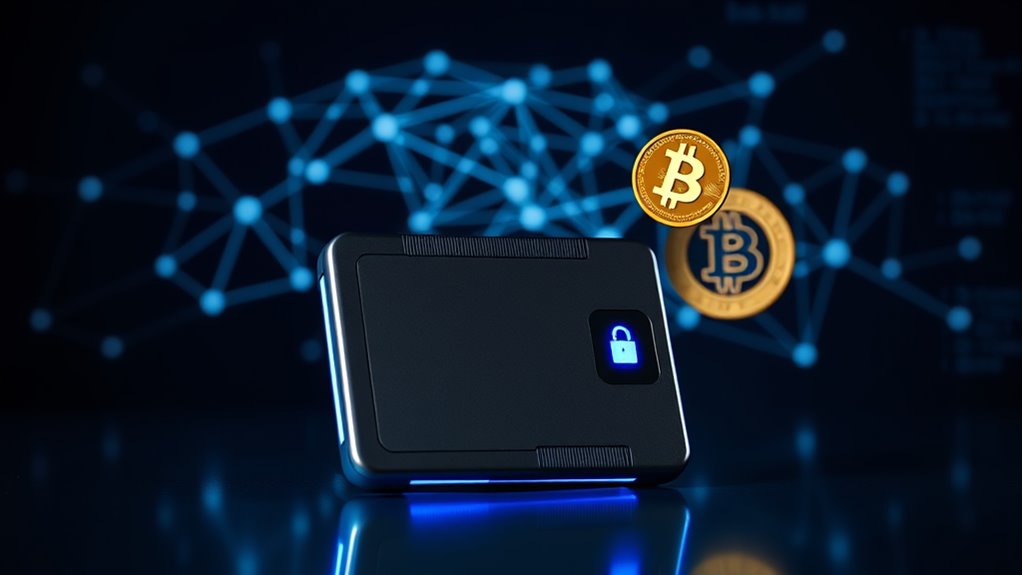
In a world where digital currencies are all the rage, security isn’t just a nice-to-have—it’s a must. With the rise of cryptocurrencies, the need for robust security measures has never been more pressing. Enter Ledger wallets. These nifty devices aren’t just fancy USB sticks; they are fortress-like guardians of digital assets. Thanks to blockchain immutability, transaction tampering is a thing of the past. The ledger is unalterable. Good luck trying to change history!
In the booming world of digital currencies, Ledger wallets stand as unyielding sentinels, safeguarding your precious assets with unmatched security.
Then there’s cryptographic encryption. This is the real deal, using algorithms like SHA-256 to keep private keys and transaction data safe. Basically, it’s like having a vault that even the cleverest thief can’t crack. Security measures are essential to protect against unauthorized access and potential losses. Hardware wallets securely store private keys in an offline environment, providing an additional layer of protection.
And let’s not forget about decentralized networks. They eliminate single points of failure, so if one part goes down, the whole system doesn’t collapse like a house of cards.
Ledger wallets take security up a notch with offline storage. Keeping private keys disconnected from the internet? Genius! Who needs online risks when you can keep your assets safe and sound, away from prying eyes? Physical confirmation buttons add manual control, ensuring that users don’t accidentally hit “send” while half-asleep or distracted. Plus, they support multiple currencies. Who doesn’t want to manage a crypto buffet without compromising security? As a type of cold wallet, Ledger devices offer superior protection for long-term storage of high-value cryptocurrency assets.
But it’s not all sunshine and rainbows. The cryptocurrency world is rife with threats. Phishing attacks, cryptojacking, and exchange hacks are lurking around every corner, waiting for someone to slip up. Users must be vigilant. Use secure networks. Update your firmware. Seriously, don’t be that person who gets hacked because they ignored a software update.
Regulatory bodies are trying to help with oversight and transparency. They’re pushing for better security standards. So, while the landscape is still risky, Ledger wallets offer a strong defense. In this chaotic digital playground, having a Ledger wallet might just be the best decision one can make.
Frequently Asked Questions
Can Ledger Wallets Store Multiple Cryptocurrencies Simultaneously?
Absolutely, Ledger wallets can store multiple cryptocurrencies at once.
They support thousands of assets, from Bitcoin to Ethereum and beyond. Users can manage everything through the Ledger Live app. It’s like a digital wallet buffet!
Each crypto gets its own little space, so they don’t mingle inappropriately. Want to keep your NFTs? No problem. Ledger’s got you covered.
How Do I Recover My Ledger Wallet if Lost?
To recover a lost Ledger wallet, the person needs that 24-word recovery phrase.
Yup, the one they hopefully wrote down and didn’t toss in the trash.
They’ll connect their device to Ledger Live, select “Restore from Recovery Phrase,” and enter their PIN.
Mistakes? Sure, they’ll get “invalid recovery phrase” errors if they mess up the words.
So, focus! Typos don’t help.
And if they used a passphrase, don’t forget that part!
Are Ledger Wallets Compatible With All Devices?
Ledger wallets aren’t exactly universal remote controls for every device out there.
The Nano S Plus? Nope, no iOS love. It’s all about USB-C and Android.
But the Nano X and Flex? They strut their Bluetooth stuff with iOS and Android.
Just don’t try it on a Chromebook; it’s a no-go.
And if you’re on Linux with an ARM processor? Yeah, that’s a hard pass too.
Compatibility can be a real headache.
What Happens if My Ledger Wallet Is Damaged?
If a Ledger wallet gets damaged, the crypto itself isn’t lost—thank goodness for that!
As long as the recovery phrase is safe, users can restore their accounts on a new device.
But, if the seed phrase is compromised? That’s a disaster waiting to happen.
So, keep that phrase locked up tighter than a secret.
Otherwise, it’s game over for those digital assets.
Just don’t expect a miracle without it!
How Often Should I Update My Ledger Wallet Software?
Firmware updates for a Ledger wallet? You should check regularly.
Seriously, don’t be that person who ignores notifications. They pop up for a reason—security patches and new features, folks!
Waiting too long? Not a great idea. You risk outdated software and potential transaction failures.
Use the desktop app, not your phone, and for heaven’s sake, back up your recovery phrase.
Stay sharp! Updates are your wallet’s lifeline; don’t neglect them.